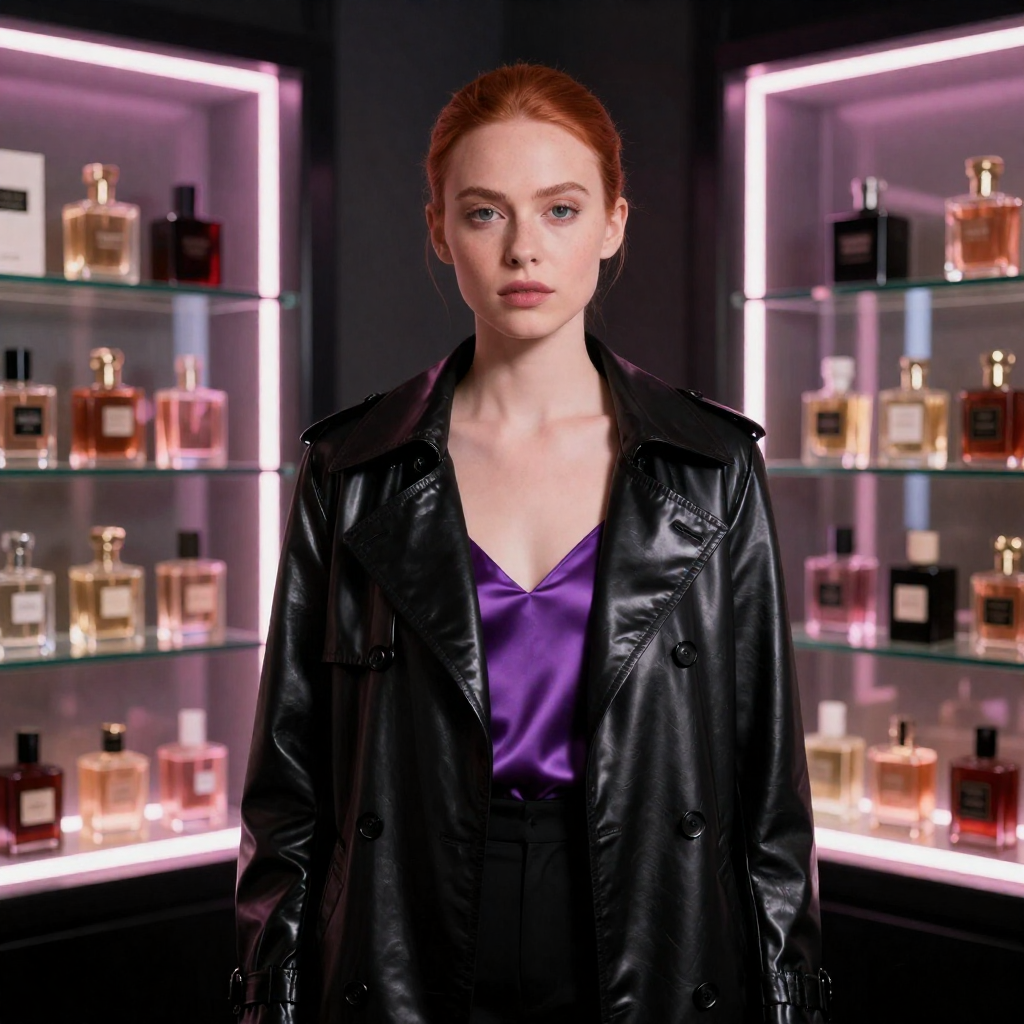
Open any good retailer’s catalogue and the photography is almost boringly consistent: same angle, same light, same distance, product after product. That boredom is the brand. Buyers trust a catalogue that looks art-directed over one that looks improvised, and content packs are catalogues — the same discipline applies, with a model in place of the merchandise.
The pack-shot specification
Fix four things for a whole pack and vary only the product — in this case, the outfit and the pose. Distance and crop: the same framing for every frame, so the set scrolls like a shelf instead of a scrapbook. Light: one named setup, repeated — candlelight, boutique shelf light, studio spotlight — because consistent light is what makes separate generations read as one shoot. Backdrop: one setting per pack. A new backdrop is a new pack. Grade: the same finish across the set, applied through the editor where a frame drifts.
Why it sells
A buyer scrolling a pack preview is doing what a shopper does at a shelf: pattern-matching. Consistent frames signal that the contents were produced deliberately, at a standard, by someone who will produce the next pack the same way. Inconsistent frames — however striking individually — signal a lucky dip. Subscribers renew for the shelf they can predict.
Running it in practice
Write the pack specification once: subject block, framing, light, backdrop, grade. Generate the set at standard tier against it, cull to the frames that hold the pattern tightest, correct the drifters with one-change editor jobs, and promote the cover frame to premium. The method is unglamorous and entirely repeatable — which is precisely what makes it worth money.